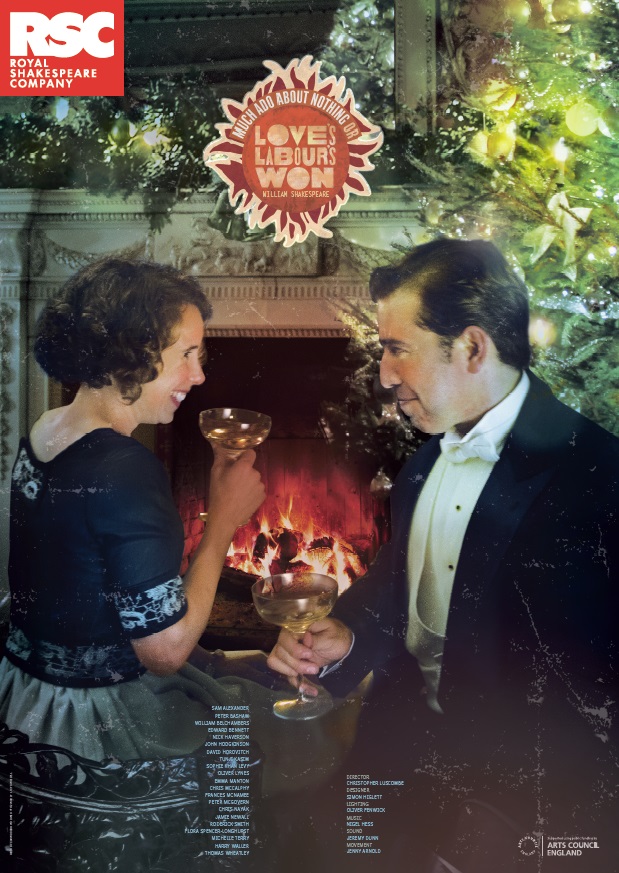
The RSC has given Shakespeare’s ‘Much Ado About Nothing’ a new title: Love’s Labour’s Won. I enjoyed this new production greatly.
Cousins Beatrice and Hero are very different characters. Hero longs for nothing but love and she is very obedient and dutiful. Beatrice is witty, feisty and scorns the idea of marriage. Then, a troop of soldiers (led by Prince Don Pedro) arrive in the village. Hero’s father, governor of the town, invites the troop to stay with them. Don Pedro accepts and a feast is held to celebrate. With Hero and Officer Claudio falling in love and Beatrice and Officer Benedick arguing every second of the day, the household is anything but peaceful. And, in the room of Don John, brother of the Prince, three men are secretly plotting to destroy Claudio’s joy.
This play is set, like all of the Royal Shakespeare Company shows that I have watched at Stratford-Upon-Avon this season, during World War One, presumably to mark the centenary. This gives Shakespeare’s much-loved play an interesting twist that I loved.
Nick Haverson plays the hilarious police officer Dogberry brilliantly. He comes across as awkward, all elbows and knees, and continually getting his words mixed up. These word muddles, or malapropisms, are also called ‘Dogberryisms’ in honour of Shakespeare’s star. Here are some of my favourite ‘Dogberryisms’:
‘Marry, sir, I would have some confidence with you, that decerns you nearly.’ (conference, concerns)
‘First, who think you the most desertless man to be constable?’ (deserving)
‘Is our whole dissembly appeared?’ (assembly)
‘But truly, for mine own part, if I were as tedious as a king, I could find it in my heart to bestow it all of your worship.’ (wealthy)
‘O villain! Though wilt be condemned into everlasting redemption for this.’ (damnation)
 Swish of the Curtain
Leave a comment